The Best Sewing Machine for Beginners: What I'd Buy Again as a Mum

best beginner friendly sewing machines

When I first started sewing, I spent more time unpicking tangled thread and Googling “why is my sewing machine making that noise” than actually sewing.

Sound familiar?

Here’s what I’ve learned: beginner frustration is real, and it’s not your fault. So many people give up on sewing—not because they’re bad at it, but because they bought the wrong machine. Either a $40 supermarket special that breaks after three uses, or a complicated machine with 200 stitches they’ll never use.

And when you’re a busy mum trying to squeeze in a hobby between school runs and bedtime, you need tools that actually work the first time.

This post isn’t full of jargon or pressure to spend a fortune. It’s just honest, real-world advice from someone who’s been exactly where you are now.

If you’re starting sewing this year, this guide will help you choose a machine that won’t make you give up.

Who This Guide Is For (And Who It’s Not)

Let me be upfront about this.

This guide is perfect for you if you’re:

  • Buying your very first sewing machine
  • A mum who wants to sew for the kids, fix clothes, or try simple projects
  • Starting sewing as a hobby (not a business)
  • Completely overwhelmed by all the choices out there

This guide probably isn’t for you if you’re:

  • Looking for professional or industrial machines
  • Only interested in embroidery
  • Already know exactly what features you need

Still here? Brilliant. Let’s talk machines.

What Beginners Actually Need in a Sewing Machine

Right, here’s the thing. When you walk into a shop or scroll through Amazon, you’ll see machines boasting about having 100 stitches, built-in embroidery patterns, and “professional-grade” features.

Ignore most of that.

What you genuinely need as a beginner:

  • Straight stitch and zigzag (that’s honestly 95% of what you’ll use)
  • Reverse stitch (for securing seams)
  • Adjustable stitch length
  • Free arm (for sewing sleeves and trouser legs)
  • Easy threading (because life’s too short for that frustration)

Nice extras that genuinely help:

  • Speed control (so the machine doesn’t run away from you)
  • Automatic buttonhole function
  • Built-in needle threader
  • A screen showing your settings

What beginners don’t need yet:

  • 100+ decorative stitches
  • Embroidery features
  • Anything labelled “professional” that costs a fortune

Here’s the reassuring bit: a simple machine doesn’t limit your learning—it supports it. You can create beautiful things without bells and whistles. Trust me on this.

The Two Machines I Recommend (From Real Use)

I’m not going to overwhelm you with ten different options. I’m going to tell you about the two machines that actually make sense for beginners—one for tight budgets, one for investing long-term.

The Best Budget Starter: Brother LS14S

The Best Budget Starter: Brother LS14S

Who this is for: The absolute beginner who wants to start sewing today for under $200 (approx).

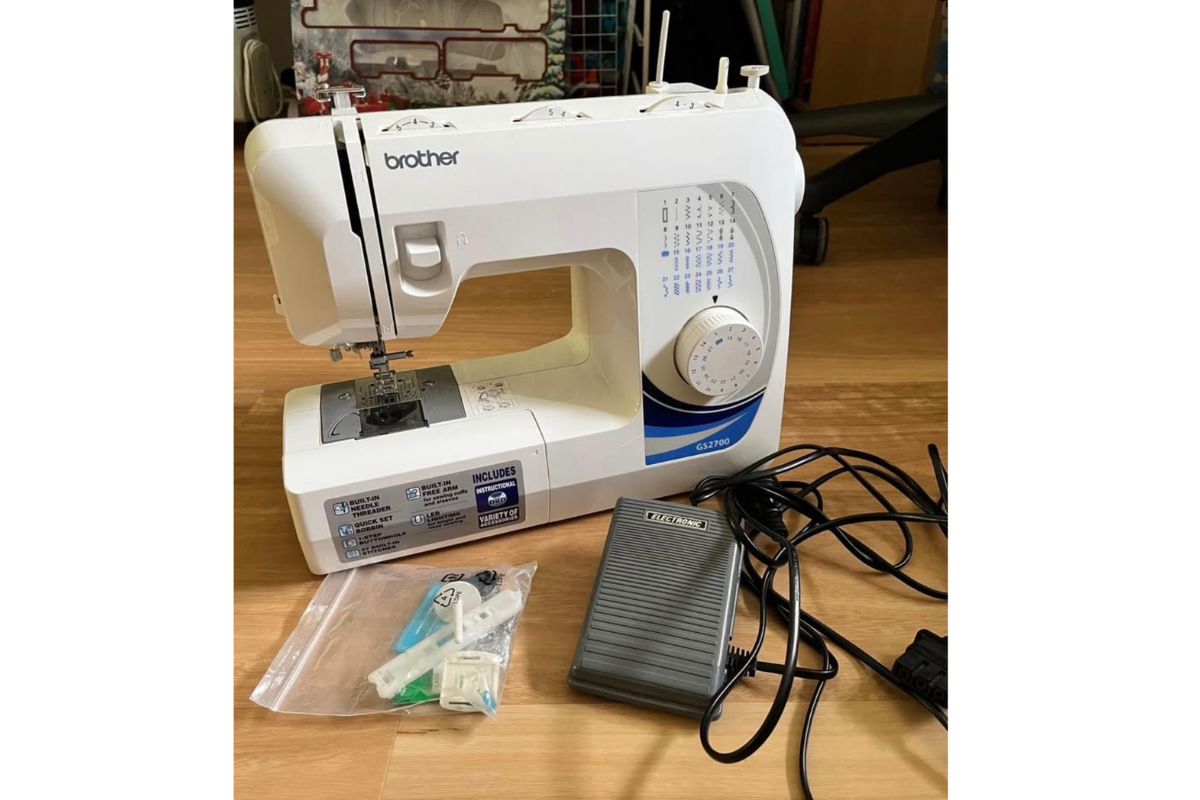
I started my sewing journey on a mechanical Brother machine (GS2700) very similar to this one. And honestly? It’s perfect for learning because it’s simple, tough, and doesn’t confuse you with computer screens or settings you don’t understand yet.

Why I’d recommend it:

The top loading bobbin is hands-down the #1 feature beginners need. You just drop the bobbin in, and you can see when your thread is running low through the clear plastic cover. No guessing, no fumbling around trying to thread it in the dark depths of your machine.

It has 14 essential stitches—including the straight stitch and zigzag, which is honestly 99% of what you’ll actually use. You don’t need fancy decorative stitches when you’re learning to sew a straight line without veering off course.

Here’s something that matters more than you’d think: it has a metal frame inside. Unlike those cheap supermarket brands that are all plastic, this won’t vibrate off your table or feel flimsy when you’re sewing through denim. It’s solid and reliable.

Who should choose this machine:

    • First-time sewists on a budget
    • Anyone who wants to test if sewing is “their thing” before investing more
    • Mums who need a machine that just works without drama

👉 Check price for Brother LS14S – Starter Model almost identical to GS2700
The "Forever" Machine: Brother FS60X

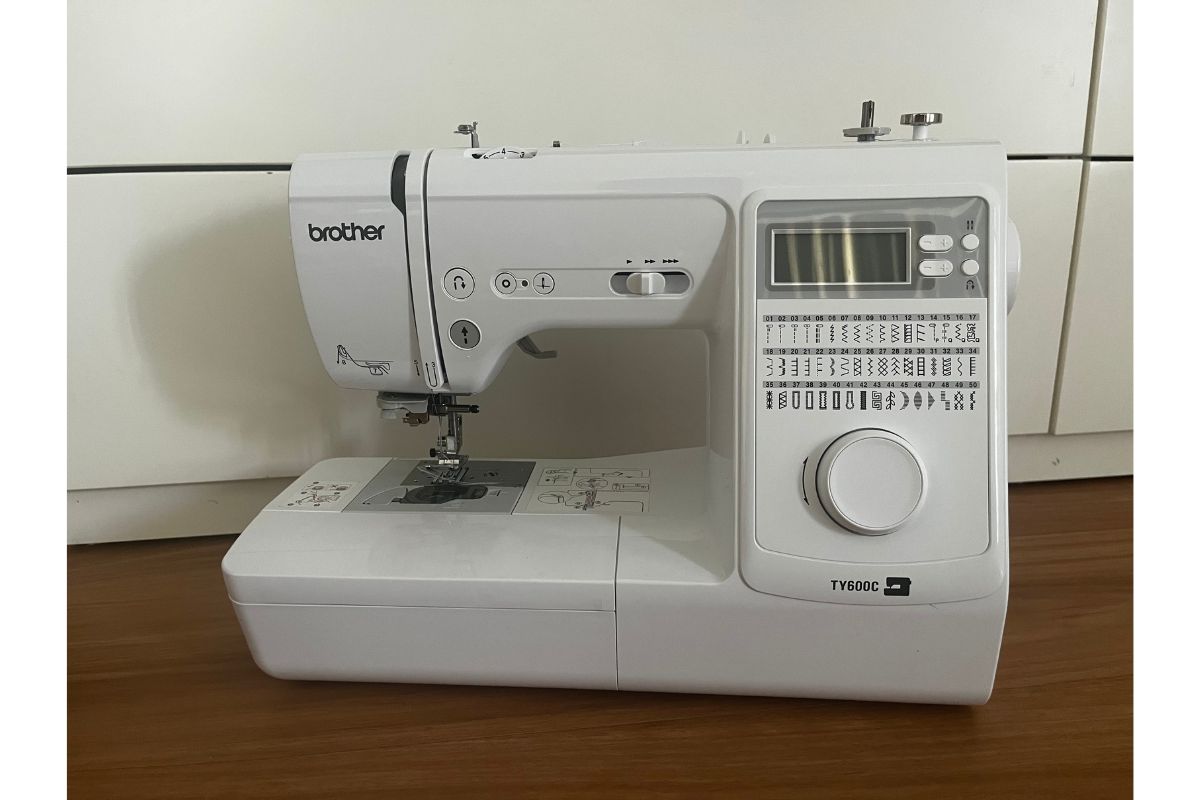
Brother TY600C computerized sewing machine

Who this is for: The sewist who wants to buy one machine and never need to upgrade.

Right, so I currently sew on the Brother TY600C, and the Brother FS60X is basically the widely available “heavy duty” version of my machine. It’s computerised, which sounds intimidating but actually makes sewing feel almost like cheating (in the best way).

Why it’s worth the extra money:

The speed control slider is my absolute favourite feature. You slide it to “slow,” and even if you accidentally stomp on the foot pedal in a panic, the machine will only stitch slowly. When I got this feature, my sewing instantly became more controlled and less stressful. It’s genuinely a game-changer for learning curves and tricky bits.

The needle up/down button is one of those features that seems small but changes everything. You can tell the machine to always stop with the needle down in the fabric, which means you can pivot around corners without losing your spot or having your fabric shift. Corners suddenly become… easy?

And here’s the thing about the FS60X being heavy duty: it’s built to handle denim and thick layers. You won’t be snapping needles left and right when you try to hem jeans or sew through canvas. It’s powerful enough to grow with you as you tackle bigger projects.

Who should choose this machine:

  • Sewists ready to invest properly from the start
  • Anyone who sews (or plans to sew) regularly
  • Mums who want one reliable machine that’ll last years

👉 Check price for Brother FS60X

Brother LS14S vs Brother FS60X Comparison

FeatureBrother LS14SBrother FS60X
Machine TypeMechanicalComputerized
Best ForAbsolute beginnersConfident beginners / hobbyists
Number of Stitches14 built-in stitches60 built-in stitches
Buttonhole4-step1-step automatic
Speed ControlNoYes (slider control)
Needle Up/Down ButtonNoYes
LCD ScreenNoYes
Noise LevelModerateQuieter & smoother
WeightLightweightSlightly heavier (more stable)
Price RangeBudget-friendlyMid-range investment
Ideal UseLearning basics, repairs, simple projectsRegular sewing, clothes, thicker fabrics

If you are completely new to sewing, the LS14S is simple, reliable, and not intimidating.
If you already know you love sewing (or want more control and smoother stitching), the FS60X is worth the upgrade for features like speed control and automatic buttonholes.

When Should You Upgrade? (Don’t Rush This)

Here’s some honest advice: don’t feel pressured to upgrade just because you’ve been sewing for six months or because someone on Instagram has a fancier machine.

You’re ready to upgrade when:

  • You’re sewing more often and it’s become a proper hobby
  • You’re tackling thicker fabrics (denim, canvas) and your current machine struggles
  • You want more control—not more stitches
  • Sewing feels genuinely fun, not confusing anymore

You’re not ready when:

  • You’re still learning the basics
  • You sew once a month
  • You think a new machine will magically make you better (it won’t!)

There is no “wrong” time to upgrade—only unnecessary pressure. I used my first machine for over a year before upgrading, and I don’t regret a single second of that time.

The Secret to Stress-Free Sewing (It’s the Thread)

Can I tell you something that took me ages to figure out?

90% of the time when your machine is “broken,” it’s actually your thread that’s the problem.

Cheap thread shreds. It creates lint that clogs your machine. It snaps mid-seam. It tangles in ways that make you want to cry.

I wasted so much time troubleshooting my machine when the real issue was the £2 bargain thread I was using.

My advice?

Stick to one good-quality thread brand. Start with basic white or black. Don’t buy a rainbow of cheap threads—buy fewer spools of better quality.

It’s genuinely the easiest way to avoid 90% of sewing frustration.

👉 My favourite thread: Gutermann

Your Essential Starter Kit (Under $20)

beginner sewing kit essentials

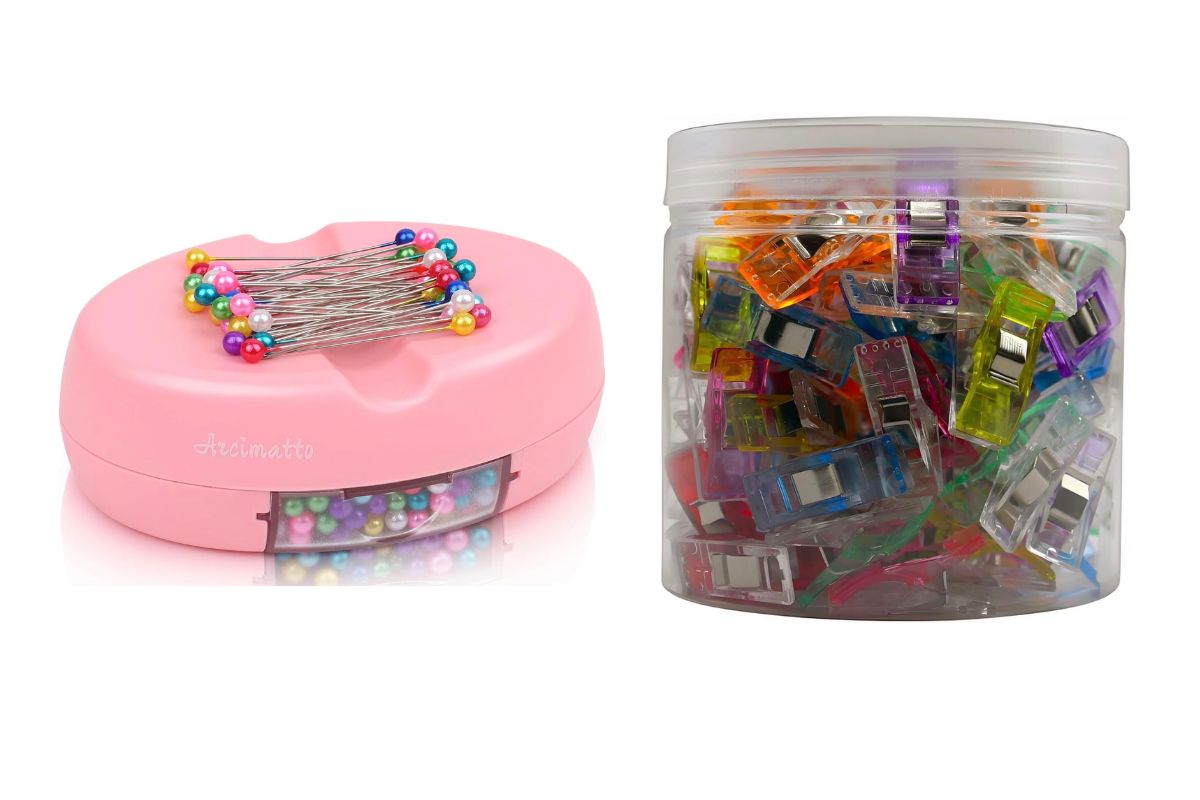
You don’t need every gadget in the haberdashery aisle. But these two things? Absolute lifesavers.

Magnetic Pin Cushion

If you have kids or pets, this is non-negotiable. Drop pins on the carpet? Wave this over them and they magically stick. No more crawling around hoping you found them all.

👉 I use this simple magnetic pin cushion – you can check here.

Fabric Clips (Wonder Clips)

Faster than pins. No stabbing yourself. Brilliant for thick fabrics. I honestly use these more than pins now, especially for binding or slippery fabrics that shift.

👉 These are the fabric clips I recommend for beginners.

Common Beginner Sewing Machine Mistakes (I Made Them All)

Let’s talk about what not to do, because I definitely learned these the hard way.

Buying too cheap: That $40 machine will break your heart (and itself). Just don’t.

Buying too advanced: You don’t need 200 stitches. You need a machine that works reliably.

Obsessing over stitch count: See above. More stitches ≠ better machine.

Ignoring thread quality: Seriously, upgrade your thread. It matters.

Thinking mistakes mean you’re bad at sewing: Everyone tangles thread. Everyone sews things inside out by accident. Everyone has to unpick seams. That’s just… sewing. It’s part of learning.

Start Simple, Enjoy Sewing

Here’s what I wish someone had told me when I started:

Sewing should feel rewarding, not overwhelming. The right machine removes the frustration and lets you actually enjoy the process. You don’t need “the best” machine—you need the right fit for where you are now.

Whether you choose the beginner-friendly LS14S or invest in the smoother FS60X, you’re making a choice that will help you learn, create, and maybe even surprise yourself with what you can make.

If you get one of these machines (or any machine!), I’d genuinely love to see what you make first. Tag me on Instagram or Facebook—there’s something so lovely about seeing other mums create things with their own hands.

Happy sewing! 🧵

Some of the links in this post are affiliate links, which means I may earn a small commission if you purchase through them. I only share products I use myself and would happily recommend to a friend.